
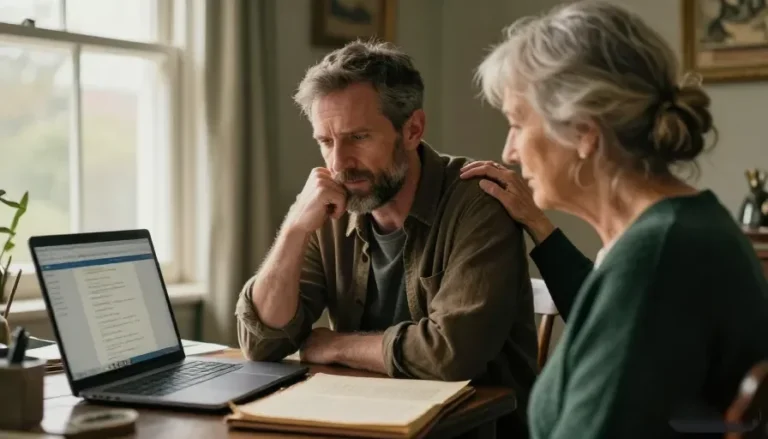
When someone uploads their grandmother’s letters or their father’s war photographs to a popular family history site, they often do so with hope: that the stories will be preserved, connected, perhaps even discovered by distant cousins.
What many don’t realise is that the act of uploading frequently means handing over those memories to a business model that treats them as inventory.
We’ve spent years watching how the dominant platforms handle personal and family data. The pattern is familiar: generous free tiers to attract users, followed by monetisation that quietly erodes control. Here are the most common ways privacy gets compromised — and why we built Briogh with a different philosophy.
1. Data becomes a product
The moment you add a name, date, photo or story to many commercial family trees, that information is often licensed, aggregated, or used to train models — sometimes even after you delete your account. What starts as “helping you connect” can end as marketing profiles or AI training fodder.
At Briogh we made a simple rule from day one: your family’s data is never sold, licensed, or shared with third parties for profit. Not partially, not anonymously, not “in aggregate”. It stays yours.
2. Public sharing is often the default
Many platforms encourage — or even require — trees to be public by default. The argument is “discovery”: the more public data there is, the more connections can be made. But for most families, sharing great-grandfather’s military service record or a great-aunt’s personal letters with strangers is not the goal.
Briogh is private by default. Every memorial, tree, and story you create is visible only to people you explicitly invite. No public gallery, no forced openness. If you ever want to share a single story or photo, you decide — and you can revoke access instantly.
3. Deletion doesn’t always mean deletion
Users often assume clicking “delete” removes their data. In reality many platforms retain copies in backups, training sets, or derived datasets long after the account is gone.
We built Briogh so that when you delete something — a photo, a story, a tree — it is gone from our systems within days. No hidden backups, no “anonymised” derivatives kept for research. Deletion means deletion.
4. Encryption is rare or partial
Even when platforms claim security, data is often encrypted only in transit or at rest on their servers — meaning the company itself can still read everything you upload.
Briogh uses end-to-end encryption for sensitive content (photos, letters, voice notes). The keys stay on your device. We never see the unencrypted material. This isn’t marketing — it’s the only way to ensure privacy can’t be compromised by internal access or future breaches.
5. The illusion of control
Terms of service are long and change frequently. Many users unknowingly grant perpetual licences or broad usage rights the moment they upload. If the company is sold or the terms change, those rights remain.
Our terms are short, written in plain language, and explicit: you own your content. We have no perpetual licence. If Briogh ceases to exist, your data is yours to export — not ours to keep.
Privacy isn’t a feature we added later. It’s the foundation we built on. We’re not trying to be the biggest family history platform. We’re trying to be the one people trust with their most irreplaceable possessions: their memories.
If you want a private, secure way to preserve your family’s story – without compromise – join the Briogh platform. We’ve built something different, and we’d be honoured to have you with us.