
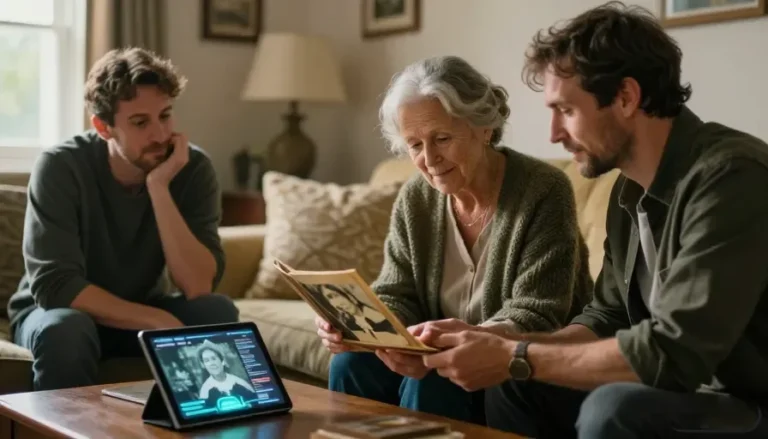
One day, someone will open the drawer or the hard drive or the old shoebox and wonder who we were.
They’ll find photographs they’ve never seen, letters they can barely read, voice notes that still carry the sound of our laugh. And they’ll ask the same question every generation eventually asks: What do we do with all of this?
For most of human history the answer was simple and brutal: some things survived, most didn’t. Paper yellowed and crumbled. Hard drives failed. Passwords were lost. The stories faded.
Today we have a different problem. We create more memories than any generation before us — thousands of photos, videos, messages, voice notes — yet we have almost no reliable way to pass them on meaningfully. The digital world was built for speed and sharing, not for longevity and intimacy.
So what should a thoughtful digital legacy actually look like?
It should be private by default. The most personal parts of our lives were never meant for the public internet. A true legacy should belong first and foremost to the people who loved us — not to advertisers, algorithms, or strangers.
It should be alive and growing. A static archive is better than nothing, but a living one is better still. Future generations should be able to add their own stories, photos, and reflections so the legacy evolves rather than freezes in time.
It should be searchable and meaningful. Not just files in a folder, but a place where a great-grandchild can search “what did she say about her mother?” and actually find the answer in her own words.
It should be secure and under family control. No company should be able to delete it, monetise it, or change the rules without permission. The family should decide who sees what, and for how long.
This is the future we’re working toward with Briogh.
Briogh is not trying to replace human memory or turn grief into data. It is trying to give families a better tool than dusty boxes or forgotten cloud accounts — a private, secure, intelligent space where memories can be preserved with dignity and passed on with care.
We don’t claim to have solved everything. Digital legacy is still a young idea. But we believe the next decade will see a quiet revolution: more families choosing to create something intentional, private, and enduring instead of leaving their stories to chance.
One day, someone will open the digital space we leave behind and feel the same warmth we felt when we first held our grandmother’s recipe book or read our grandfather’s wartime letters.
They won’t just see names and dates. They’ll hear voices. They’ll feel presence. They’ll know they are part of something that continues.
That is the future of digital legacy we want to help build.
If you’d like to start creating something that can truly last, try Briogh today. We’d be honoured to help you begin.